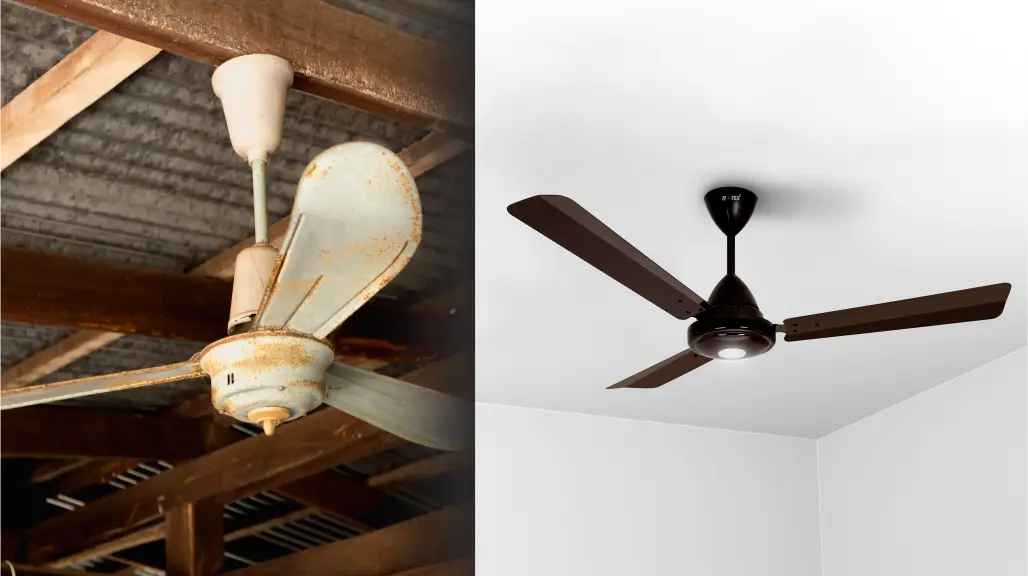
Modern Ceiling Fans vs Traditional Fans: Why Rotex Leads the Change
- March 15, 2026
- By Rotex Industries
Utility to Statement Piece: The way Rotex Modern Ceiling Fans is reinventing home comfort.
The identity of ceiling fans in Indian homes was quite simple for decades; the fans were functional. They were suspended on the ceiling, turning at a certain rate, produced a humming sound, and burned up electric current all the time. No one talked of their design, technology and efficiency. A fan was just a fan.
But Homes have Changed
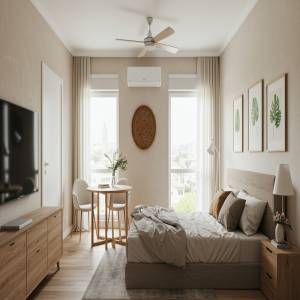
Today interiors are designed in a refined manner. Textures on walls, lighting, coordination of furniture, and even minor fixtures are selected. An antique large fan with a regulator and mechanical sound cannot fit in such areas any longer. Contemporary house owners are now demanding that their appliances should be in tandem with the appearance of their house, as well as provide performance and efficiency.
This has changed the ceiling fans, not only to be simple electrical powered gadgets, but rather they have evolved to become design-oriented smart appliances, and brands such as Rotex are leading this.
The Technological Makeover behind the Revolution
Conventional ceiling fans operate on AC induction motors. These motors rely on carbon friction motors and a commutator. It is due to this that they use 70-80 watts of electricity and heat, produce vibration, and noise. With time, efficiency decreases, and speed varies witha change in voltages.
However, today, ceiling fans are powered by the BLDC (Brushless Direct Current) motor technology.
The use of carbon brushes is eliminated in BLDC motors. Electrical controllers are accurate control motors that minimise energy consumption and increase the use of torques. The result is immediate:
- Power consumption is reduced to 28-35 watts.
- The intensity of heat is minimal.
- The motor life is greatly increased.
- There is consistency in performance.
It is due to this one technological upgrade that the contemporary fans are not upgrades only, but replacements of an old system.
Aesthetics: Fans Now Complete Interior Design.
A visual change is one of the largest ones.
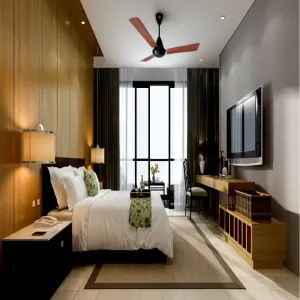
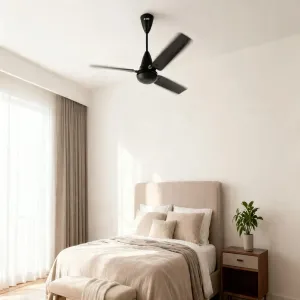
Previously, homeowners attempted to shun ceiling fans during the planning of decoration. They are now actively chosen by them. The fan is not a background object anymore, being a part of the visual composition of the room.
This is what ROTex has paid much attention to. Their designs are designed in such a way that they fit into the modern interiors:
- Minimalist blade profiles
- Wood and matte, and wooden finishes.
- Decorative motor housings
- Dust-resistant coatings
The Eco Lite and Eco Wooden series are suitable to modern apartments as well as high-end homes. Rather than attracting the wrong attention, the fan has been used to make the ceiling look better like a lighting beautifier.
This is important in a practical sense. One of the largest continuous surfaces on a room is the ceiling. A properly-designed fan enhances the whole impression of the space.
Silent Operation: Comfort You Are Not Hearing.
Conventional fans tend to create a humming noise, particularly at low speed. The noise normally falls between 65 dB and over, which is due to the friction of the motors, the resistance of the regulator, and the vibration.
- The outputs of the fans are different in BLDC.
- There are no carbon brushes, and mechanical friction is minimal, so Rotex fans are approximately 5055 dB or practically the sound of a room. The motor initially starts with ease, and the balance during rotation is maintained.
- The disparity is obvious during the night.
- Bedrooms become quieter. The study rooms are narrower. Conversations or watching television in the living room are less stressful. A lot of users report better sleep due to the absence of repetitive mechanical humming.
It is a minor modification - but one which influences the comfort of everyday life to a considerable degree.
More efficient Airflow and Low Power
One of the expectations is that the less electricity we use, the less air flows. The contemporary BLDC fans are a refutation of that.
Rotex fans are efficient with high delivery of air up to 230 CMM (Cubic Meter per Minute) with less than half the power consumption of conventional fans. This is due to the fact that the efficiency of the motor is increased and the torque is electronically regulated.
Also, the airflow is maintained even when changing the voltage. In most of the Indian homes, the voltage in the evening hours is reduced as there is increased demand of electricity. The traditional fans slow down instantly. BLDC fans are fast due to the fact that the electronic driver can compensate the voltage variation.
The outcome is even cooling rather than haphazard comfort.
The Wall Regulator has been replaced by Smart Controls
The wall regulator was a mandatory element in using a fan. Speed adjustment involved actually rising and using a dial.
The modern Rotex fans eliminate that process.
They include:
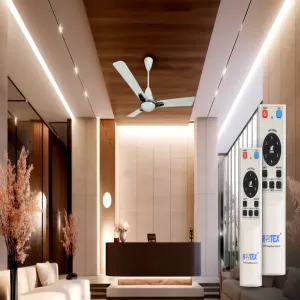
- IR/RF remote controls
- Several speed gears (usually 7 gears)
- Sleep mode
- Timer functions
- LED speed indicators
There are models that also support integration of a mobile app and voice control, and make the fan a part of a smart home.
This convenience is the most observable at night or during work. The user does not have to interrupt their rest or their concentration; they only manipulate airflow immediately.
Stability During Power Cuts
Power blackouts continue to be a reality in most areas. Conventional fans find it difficult to start and deplete the battery in a short time when they run on inverter backup.
Rotex BLDC fans are inverter compatible. These use a lot less power and therefore can operate up to three times longer on the same inverter battery. They do not stall even in lower voltage ranges (100 V to 290 V).
This transforms the power blackout experience, which would be irritating, into a bearable inconvenience.
Sturdiness and LTC
In the absence of carbon brushes, the friction and heat inside the motor are much less. Reduced operating temperature enhances the life of components and wear. The materials employed in building Rotex are also corrosion-resistant and made of high-grade aluminium or ABS blades to avoid rusting and imbalance.
Together with a 2+1 year warranty, the fan will also be a long-lasting appliance and not a constantly changing one.
The New Role of the Modern Ceiling Fan
Ceiling fans have become a three-purpose device:
- Cooling device
- Interior design element
- Smart home component
Rotex integrates all three. It provides the functionality of the latest motor technology, the aesthetic elements demanded by modern houses, and the ease sought by and in linked appliances.
It does not merely save on electricity, though it can save up to 65%. The true worth is enhanced every day: less noise, steady air circulation, remote control, and fully furnished interiors.
Ceiling fan, a home appliance that used to be the most neglected area, has now been made one of the smartest designed.
And this is exactly what is happening in the modern houses that are not merely going out to fit any fan but are smarter ones.
Conclusion
Ceiling Fans:
| Parameter | Traditional Ceiling Fans (AC Motor) | Modern Ceiling Fans (BLDC Technology) |
|---|---|---|
| Motor Type | AC Induction Motor | Brushless DC (BLDC) Motor |
| Power Consumption | 70–80 Watts | 28–35 Watts |
| Energy Efficiency | Low efficiency, high electricity usage | Up to 60–65% energy saving |
| Monthly Electricity Cost | Higher due to continuous operation | Significantly reduced running cost |
| Noise Level | Audible humming (≈65 dB+) | Whisper-quiet operation (≈50–55 dB) |
| Heat Generation | Produces more heat due to friction | Very low heat generation |
| Speed Control | Manual regulator on the wall | Remote control, app, and voice control |
| Smart Features | Not available | Timer, sleep mode, scheduling, smart integration |
| Performance During Voltage Fluctuation | Speed drops noticeably | Maintains constant speed |
| Inverter Compatibility | Drains battery quickly | Runs 2–3× longer on the inverter |
| Air Delivery | Average airflow | High and consistent airflow |
| Maintenance | Brushes and regulators wear out over time | Minimal maintenance required |
| Lifespan | Shorter due to mechanical friction | Longer motor life |
| Design & Aesthetics | Basic, functional look | Modern, stylish, decorative designs |
| Initial Cost | Lower purchase price | Slightly higher upfront cost |
| Long-Term Cost | Expensive due to electricity bills | More economical over time |
Here is a difference table of Traditional versus Modern Ceiling Fan.
Rotex Ceiling Fans are better than any other traditional fan, as is clear from the above table, so